Fleetikalast-mile ecosystem for distributors & carriers
Get started free →
Market guide

Last-Mile Delivery in Ukraine: A Practical Guide for Distributors and Carriers

Last-mile delivery in Ukraine runs on its own rules. A few national carriers move most consumer parcels, cash-on-delivery is the norm rather than the exception, and operators here have learned to keep deliveries going through real disruption. For distributors and carriers, the last mile is where the cost piles up — and where most of the waste is actually fixable. This guide walks through how the Ukrainian market works, the problems unique to it, and the practical steps to tighten routes and cut costs in 2026.
Start free — built for the Ukrainian market, in Ukrainian →
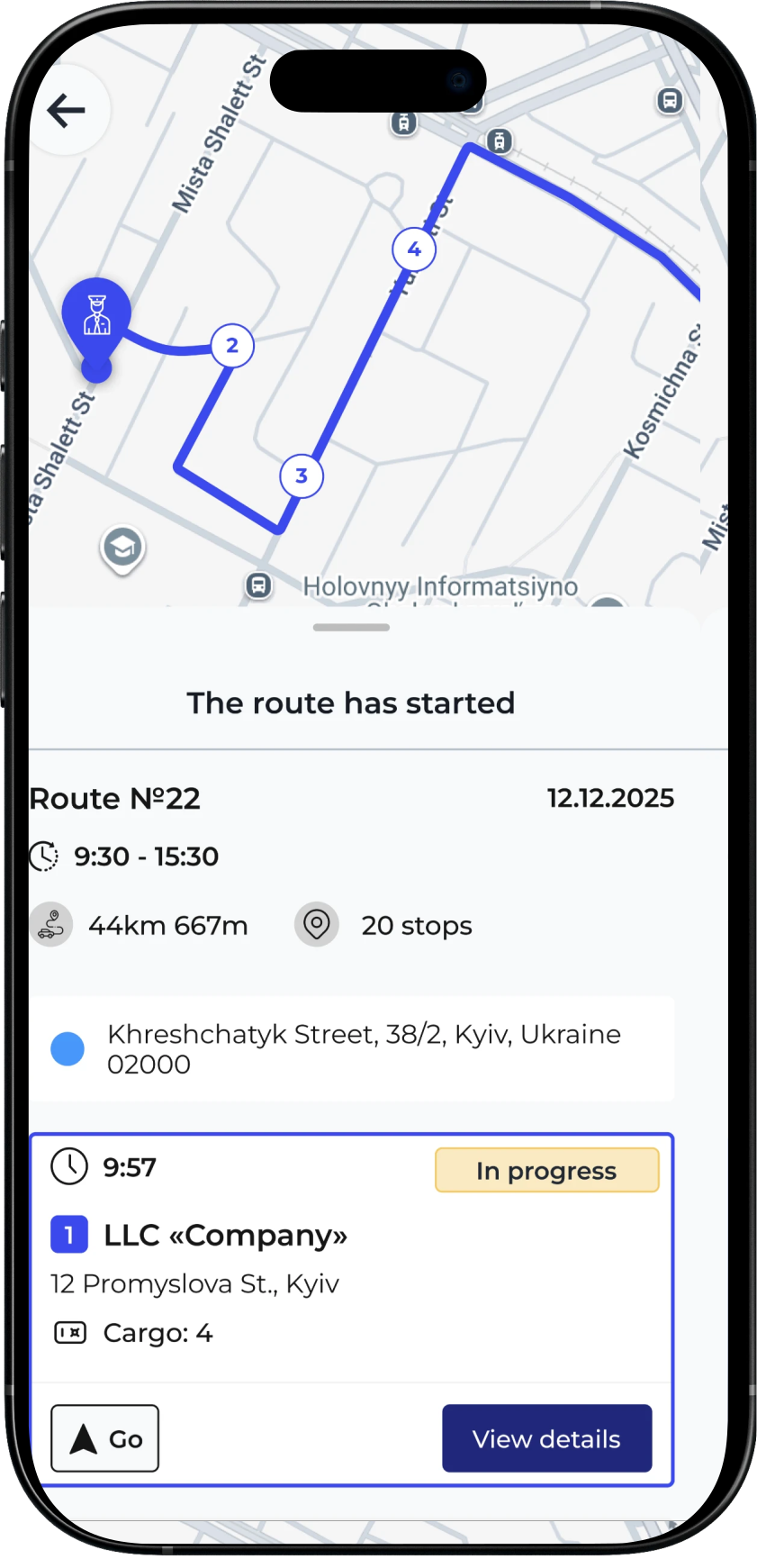
Fleetika F-Driver mobile app — the driver's delivery view
The landscape

The Ukrainian last-mile landscape

The parcel market here is big and moving fast. E-commerce keeps climbing, a handful of national carriers handle the bulk of consumer parcels, and behind them a long tail of distributors and regional carriers feeds goods to stores, pickup points and clients. Two things shape how that work actually gets done:

Cash-on-delivery is still common
Most orders are paid on delivery, so reconciliation, returns and solid proof of delivery carry far more weight here than in markets where customers pay by card up front.
A fragmented market
Plenty of fleets still juggle an old system, a pile of spreadsheets and a few messenger chats. Money leaks at exactly those handoffs.
Challenges

Challenges specific to Ukraine

Operational resilience
Power cuts and blocked routes are part of normal planning now. You need software that keeps running through the instability and lets dispatchers re-plan in minutes, not hours.
Cash-on-delivery reconciliation
Every drop has to be confirmed and tied back to its payment. Do that by hand and it's slow, and it's where mistakes creep in.
Multi-region coverage
Cities and regions differ sharply in road quality and access, which makes planning routes by eye an expensive habit.
Cost pressure
Fuel, drivers and vehicles eat the budget. A few minutes of slack per route looks harmless until you multiply it across hundreds of drops a day.
Mixed driver tooling
Drivers and managers want tools in their own language, running on the phones already in their pockets.
Buying checklist

What to look for in last-mile software for Ukraine

  • A native Ukrainian (and Russian) interface for drivers, dispatchers and managers alike.
  • Route optimization that copes with the real multi-region, multi-vehicle picture, not just reshuffling stops on a single route.
  • Digital proof of delivery (ePOD) with photo, signature and geolocation, so you can confirm a handover and settle a disputed drop or return without an argument.
  • Integration with the local tools you already run, from a CRM like KeyCRM to your e-commerce and accounting.
  • Native GPS and telematics support — Wialon, Teltonika and the like are everywhere in Ukrainian fleets — so the hardware on your trucks stays put.
  • Real-time visibility with alerts that reach you early, so a disruption gets handled instead of discovered after the delivery already failed.
  • Pricing that fits local economics — a predictable package by fleet size works out better than per-driver or per-task models that climb as you grow.
Step by step

How to optimize last-mile delivery in Ukraine

1. Consolidate into one system
Pull drivers, dispatchers and managers out of the spreadsheet-and-messenger routine and onto one platform that updates in real time.
2. Connect your data and hardware
Import orders straight from your CRM or store, and connect the GPS trackers already mounted in your vehicles.
3. Let the algorithm build routes
Swap by-eye planning for tight, optimized routes. Fleets typically see 20–30% off fuel and around 30% off mileage.
4. Digitize proof of delivery
Capture photo, signature and geolocation on the driver's phone to confirm each handover — which matters a lot for cash-on-delivery — and to make returns straightforward.
5. Manage by real-time visibility
Lean on live tracking and early ETA alerts to catch a disruption while it's still a delay and not yet a failed delivery.
6. Measure cost per delivery and route
Track how optimization, fill rate and your failed-delivery rate move those numbers over time.

Route optimization software · Reduce Last-Mile Delivery Costs

How Fleetika fits

How Fleetika fits the Ukrainian market

Fleetika is a last-mile ecosystem built for precisely this audience: distributors and carriers that own their fleets.

  • In your language — a full Ukrainian and Russian interface for the whole team.
  • Local integrations — native KeyCRM, plus Wialon, Teltonika, Sinotrack and GT06, with no hardware swap.
  • One platform — dispatcher portal, F-Driver app, F-Manager app, FMS and TMS, contact centre.
  • Built to take a hit — real-time tracking and early alerts so disruptions get managed, not missed.
  • Local-friendly pricing — a package subscription by fleet size from $250/mo for the Ukrainian and Eastern-European tier, with no per-driver or per-task escalation.
  • Quick to start — setup runs about two weeks, with your first optimized route on day one.
See Fleetika in action — first route on day one →

FAQ

What is the best last-mile delivery software for Ukraine?
If you're a distributor or carrier that owns a fleet and wants a Ukrainian-language, all-in-one platform with route optimization, ePOD and local integrations, Fleetika is built for this market specifically.
How does Fleetika help with cash-on-delivery (COD) orders?
Fleetika doesn't process payments itself. What it gives you is digital proof of delivery — photo, signature and geolocation on every order — so you can verify a handover, reconcile it against the order and clear up any disputed drop. Collecting the cash stays with your carrier or payment provider.
Can I keep my existing GPS trackers?
Yes. Trackers like Wialon, Teltonika, Sinotrack and GT06 connect natively to Fleetika, with nothing to rip out and replace. A tracker running a different GPS protocol can be brought in as a separate integration.
How much can route optimization save a Ukrainian fleet?
Usually 20–30% on fuel and around 30% on mileage, won back by building denser routes and cutting the dead miles between stops.