
Excel and WhatsApp vs Delivery Software: When It's Time to Switch
Almost every delivery operation runs on the same two tools at the start: orders in an Excel sheet and drivers in a WhatsApp group, held together by a dispatcher doing it all by hand. While volumes are small, that's enough. The trouble starts as you grow — the manual setup stops keeping up, and losses that used to be invisible turn into real money. This guide looks at what that approach actually costs, how to tell you've outgrown it, and how to move to dedicated delivery software without stalling the operation.
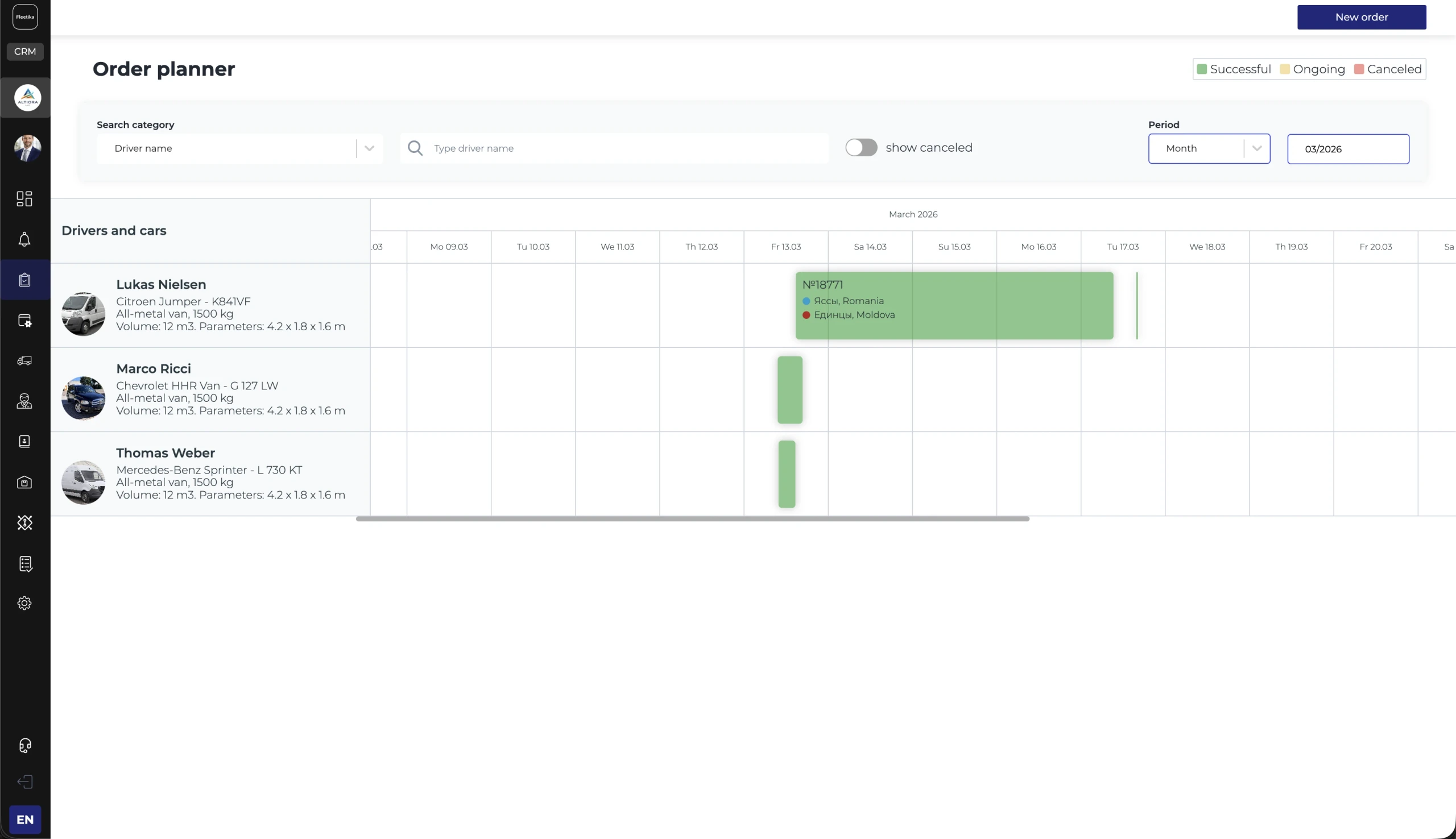
Why teams start with Excel and WhatsApp
Teams start there for good reason: it's free, familiar, and handles a dozen deliveries a day without complaint. The spreadsheet holds the orders, the chat handles quick coordination, and a sharp dispatcher covers the rest. Early on, that's a sensible choice. The problem isn't the tools themselves but the joins between them. Every time an order moves from the sheet to the chat and back, a little control is lost, and the more orders you handle, the more that costs.
What a spreadsheet and a chat really cost you
None of these problems looks serious on its own. Together, they decide whether a route makes money or loses it.
- Orders get retyped by hand between tools, and something is lost or garbled at each step.
- Nobody sees the operation in real time — a delivery's status sits in the driver's head or scrolls past in the chat.
- Routes are planned by eye, so vehicles cover more distance than they need to and burn fuel doing it.
- There's no proof of delivery, so disputed drops get written off — no photo, no signature, no location.
- A failed delivery usually reaches you through an annoyed customer rather than the system.
- Trucks often leave with room to spare.
- When the whole arrangement depends on one person, their day off or sick leave brings it to a halt.
Spreadsheet + chat vs a delivery platform
| What matters | Excel + WhatsApp | Delivery platform (e.g. Fleetika) |
|---|---|---|
| Order entry | Manual, retyped between tools | Entered once, synced everywhere |
| Route planning | By eye | Algorithmic, multi-vehicle, in seconds |
| Real-time tracking | None | Live, with proactive ETA alerts |
| Proof of delivery | Paper or nothing | Digital ePOD (photo, signature, geolocation) |
| Driver guidance | Messages | Guided route in a driver app |
| Visibility for managers | Ask around | One screen, same reality for everyone |
| Scales with volume | Breaks | Built for it |
Signs you've outgrown Excel and WhatsApp
- You spend real time every morning building routes by hand.
- Two people edit the sheet at once and overwrite each other's work.
- You hear about failed deliveries from customers before your own team does.
- Drivers call to ask what's next instead of seeing it.
- Answering "where's my order?" takes three messages.
- Training a new dispatcher means weeks of knowledge that lives only in someone's head.
If three or more of these sound familiar, it's time to look at a dedicated tool.
What you gain by switching
When you move to a delivery platform, the economics change. Optimized routing typically cuts fuel by 20–30% and mileage by about 30%. Orders are entered once and visible to everyone live, so the team works from the same picture. Every drop carries proof — photo, signature and geolocation — which settles disputes instead of writing them off. Delays surface early enough to fix, and the operation's knowledge sits in the system rather than in one person's memory.
How to switch without disruption
Leaving the spreadsheet behind doesn't have to mean a painful rollout. You keep your existing GPS trackers — Wialon, Teltonika, Sinotrack or GT06 — so there's no hardware to replace, and a tracker on a different GPS protocol can be added as a separate integration. Vehicles, drivers and orders import from Excel/CSV or your CRM. Full setup takes about two weeks, and your first optimized route goes out on day one.
FAQ
Compare Fleetika: Fleetika vs OptimoRoute · Fleetika vs Onfleet · Fleetika vs Route4Me · Fleetika vs Routific · Fleetika vs Spoke · Fleetika vs ANT-Logistics · Fleetika vs Track-POD · Fleetika vs eLogii · Fleetika vs Tookan · Fleetika vs Onro · Fleetika vs Shipday · Fleetika vs Cartwheel